
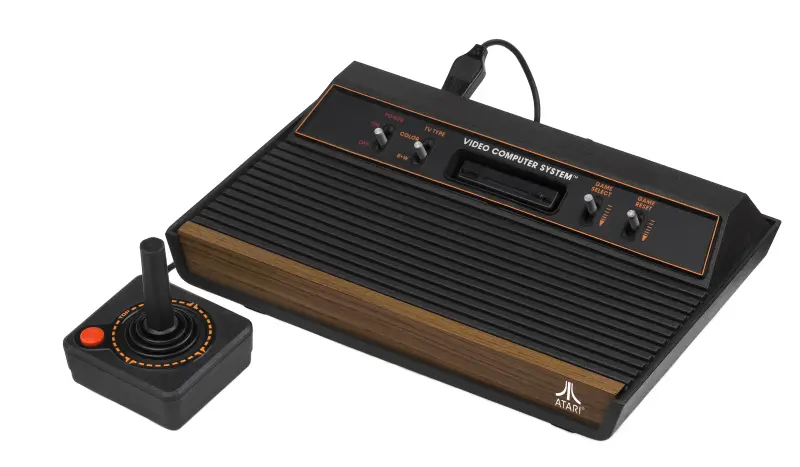
WHAT_YOU_NEED_TO_KNOW
- Todd Rogers claimed a 5.51-second time on Atari 2600 Dragster in 1982; it stood recognized for about 35 years.
- Engineer Eric "Omnigamer" Koziel disassembled the game and found 5.57 seconds is the fastest the code can output.
- Twin Galaxies removed all of Rogers' scores and banned him on January 29, 2018; Guinness stripped his records the next day.
- Rogers never produced video proof, and no one has ever reproduced 5.51.
Five point five one. Two hundredths of a second is the whole story here, and Todd Rogers never had them.
In 1982, Rogers said he ran a 5.51-second time in Dragster, a drag-racing game Activision had shipped for the Atari 2600 two years earlier. Back then, "proof" was a Polaroid. You snapped a photo of your TV screen, mailed it in, and Activision checked it, published qualifying sub-six-second scores in its newsletter, and mailed you a cloth patch. That was the verification system. A camera, an envelope, and the assumption that nobody would lie about a car game.
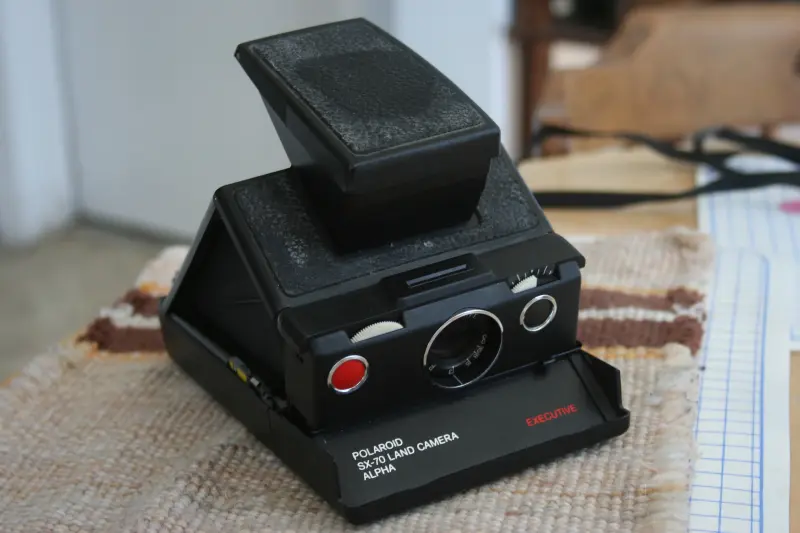 A Polaroid SX-70 Land Camera. Activision's verification in the early 1980s came down to a photograph of a television screen, mailed in. Credit: Robert Taylor. License: CC BY 2.0.
The 5.51 went into the record books and it stayed there. For roughly 35 years.
The man they called Mr. Activision
Rogers was good, and he was everywhere. He held so many world records in Activision titles on the Atari 2600 that people started calling him "Mr. Activision." In 1986 he was invited onto the U.S. National Video Game Team. For more than two decades he sat near the top of the console-record world, and the Dragster time became his signature, the oldest and strangest jewel in the collection.
Then it got official in a way that would matter later. In 2012, Guinness World Records handed Rogers an award for the "Longest-standing video game record," pinned to that 1982 Dragster run. It was billed as a first of its kind. A record for how long a record had lasted. The 5.51 wasn't just a fast time anymore; it was a monument to endurance.
Nobody had re-checked the underlying claim. Why would they? It had a Polaroid behind it once, and it had 30 years of momentum. The honor system doesn't circle back.
Someone finally read the code
Eric Koziel does not deal in Polaroids. Known online as "Omnigamer," he's a speedrunner and engineer who does tool-assisted runs, and at some point he did the thing nobody in three decades had bothered to do: he pulled apart Dragster's actual program.
Dragster isn't a physics simulation. It's a small piece of 1980 assembly code counting frames. There are only so many outputs the machine can produce, and Koziel mapped them. His conclusion was flat: the fastest time the game can generate under normal play is 5.57 seconds. Not "very hard to beat." The number 5.51 is not something the ROM can put on the screen at all. Koziel's own theoretically perfect run landed on 5.57, with only about eight frames of leeway to spare.
There was a second data point sitting in the history, too. According to Activision-era testing reported by Kotaku, the company's own people had once calculated the theoretical best at 5.54 seconds. Slower than the record their newsletter had helped bless. Even the game's makers, decades earlier, had a ceiling below 5.51.
So the math had been there, in one form or another, the entire time. The reputation just outran it.
How a self-reported score survives 35 years
The reason it lasted this long isn't only nostalgia. It's structure.
Rogers wasn't just a competitor; he was a senior figure inside Twin Galaxies, the outfit that keeps the official scores. That meant he could log his own results into the system without an independent member checking the work, bypassing the old "buddy system" that was supposed to keep everyone honest. Many of his scores rode on a referee who happened to be a longtime friend, and the supposed video evidence never surfaced in public. The fox wasn't guarding the henhouse. The fox was filing the paperwork on how many hens there were.
 Walter Day, founder of Twin Galaxies, photographed at MagFest in January 2009. Credit: Chris Dlugosz. License: CC BY 2.0.
That's the part that makes the Dragster time less of a mystery. It never had to survive scrutiny, only avoid it.
The dispute
The scrutiny came anyway. On August 11, 2017, a Twin Galaxies member named Dick Moreland filed a formal dispute of the 5.51, arguing the record was impossible on the grounds that it had been demonstrated impossible in code, leaning directly on Koziel's teardown. The thread that followed ran past 2,700 posts.
Over the next year and a half, gamers turned into investigators. The labor split cleanly. Koziel had the code, the frame counts, the technical spine of the case. YouTuber Apollo Legend became the public face, compiling the broader evidence into a video that called on Twin Galaxies to actually rule on it. Moreland had filed the paper. Between them, a 35-year-old claim finally got the audit it had dodged since the Reagan administration.
The core problem never went away for Rogers' side: there was no recording. Twin Galaxies looked, and it couldn't find a single person willing to testify on the record that they had directly seen the 5.51 happen.
The two-day collapse
On January 29, 2018, Twin Galaxies' administrative staff ruled unanimously. They didn't just void the Dragster time. They removed every score Todd Rogers had, and banned him from their competitive leaderboards. The ruling put the ceiling in writing: "achieving score times of less than 5.57 seconds is not possible under standard and normal play conditions."
Guinness didn't wait. On January 30, the very next day, it stripped the "Longest-standing video game record" and any other titles Rogers held, noting that it treats Twin Galaxies as its trusted advisor on video game high scores. The record for how long a record had lasted was itself erased, one day after the record it was built on.
What's actually possible
Since the reckoning, roughly a dozen speedrunners have legitimately posted 5.57 seconds in Dragster, on camera. That is the floor the code allows, and people keep touching it.
No one has ever reproduced 5.51. Not the field, not the challengers, and not Todd Rogers, who held it for 35 years and never once did it in front of another human being.
INTEL_SOURCES
- Wikipedia — Todd Rogers (gamer)
- Kotaku — Doubt And Drama Still Haunt An Old, Seemingly Impossible Atari World Record
- Kotaku — Infamous Atari Player Disqualified From World Record After 35 Years
- Kotaku — Guinness Officially Nixes Todd Rogers' Dragster Records
- Engadget — 'Dragster' record holder stripped of his title after 35 years
- Twin Galaxies (official dispute thread) — Dispute: Dick Moreland - Atari 2600 - Dragster - Player: Todd Rogers - Score: 05.51
- Wikipedia — Dragster (video game)
- The Washington Post — Twin Galaxies bans Todd Rogers for life, throws out his records
COMMENTS (0)
Be the first to comment