
How GTA Makes Money, Told Through Take-Two's Own Filings
By ReadyGame Editorial
Every Take-Two annual report since 2014 says what share of revenue came from Grand Theft Auto. Multiplied out, the series brought in between $680 million and $1.08 billion in each fiscal year from 2016 to 2026, while its share of the company fell from more than half to about an eighth.
What you need to know
- Take-Two's 10-K filings put Grand Theft Auto at 68.9% of net revenue in fiscal 2014 and 12.4% in fiscal 2026.
- By our calculation from those filings, GTA products earned between $679.9 million and $1.08 billion in every fiscal year from 2016 to 2026.
- Recurrent consumer spending, Take-Two's term for in-game purchases and add-ons, was 41.6% of its net revenue in fiscal 2018 and 78.1% in fiscal 2026.
- Take-Two agreed to buy Zynga on January 10, 2022, at an enterprise value of $12.7 billion, then booked goodwill impairments of $2.34 billion and $3.55 billion over the next two fiscal years.
- Take-Two estimates GTA VI's day-one worldwide retail sales on November 19, 2026, at $3.79 billion, after 32.5 million units sold before release.

Grand Theft Auto VI - PS5
Grand Theft Auto VI - Xbox Series
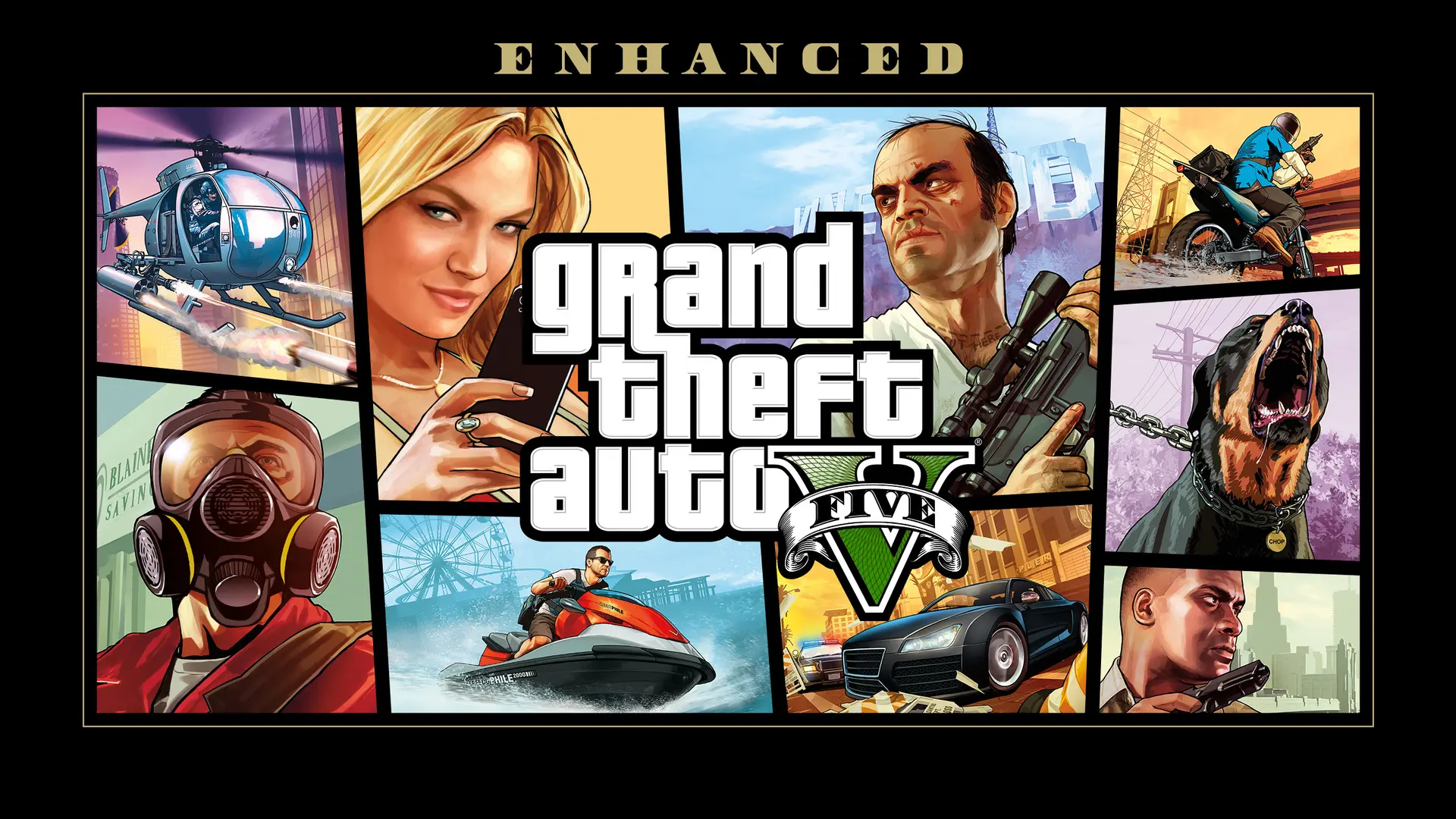
Grand Theft Auto V Enhanced Edition
Every annual report Take-Two Interactive files carries one sentence about its biggest series. The report for its latest fiscal year reads: "Sales of Grand Theft Auto products generated 12.4% of our net revenue for the fiscal year ended March 31, 2026." The report filed in 2014 gave the figure as 68.9%.
Take-Two's net revenue was $2.35 billion in fiscal 2014 and $6.66 billion in fiscal 2026. The smaller slice came to about $825 million.
"Grand Theft Auto products" covers every game in the series and GTA Online. Take-Two doesn't publish what the percentage adds up to in dollars, so we multiplied it out for every year since GTA V came out. Take-Two's fiscal year ends on March 31, which puts GTA V's launch on September 17, 2013, in fiscal 2014.
What GTA earned, year by year
| Fiscal year | Take-Two net revenue | GTA share | GTA revenue (our calculation) |
|---|---|---|---|
| 2014 | $2,350.6M | 68.9% | $1,619.5M |
| 2015 | $1,082.9M | 28.0% | $303.2M |
| 2016 | $1,413.7M | 54.5% | $770.5M |
| 2017 | $1,779.7M | 38.2% | $679.9M |
| 2018 | $1,792.9M | 39.7% | $711.8M |
| 2019 | $2,668.4M | 25.7% | $685.8M |
| 2020 | $3,089.0M | 23.0% | $710.5M |
| 2021 | $3,372.8M | 29.2% | $984.8M |
| 2022 | $3,504.8M | 30.9% | $1,083.0M |
| 2023 | $5,349.9M | 14.6% | $781.1M |
| 2024 | $5,349.6M | 14.7% | $786.4M |
| 2025 | $5,633.6M | 12.6% | $709.8M |
| 2026 | $6,656.4M | 12.4% | $825.4M |
Net revenue and GTA share as stated in Take-Two's Form 10-K for each year.
Fiscal 2015 looks low partly because of accounting. Take-Two then pushed some revenue from games with online features into later periods, and its fiscal 2016 report shows a net deferral of $585.8 million for fiscal 2015 across all its games.
After that, the series never earned less than $679.9 million in a year or more than $1.08 billion. Its best year, fiscal 2022, ended eight and a half years after GTA V's release.
Getting to a table like that took one change of business model and one very expensive acquisition. The first game almost didn't come out at all.
A music company's car game
DMA Design, a studio in Dundee, Scotland, dated its design document for the game on March 22, 1995. It was called Race'n'Chase. Gary Penn, who worked on it, later described the accident that gave it a hook: "One day, I think it was a bug, the police suddenly became mental and aggressive. It was because they were trying to drive through you… That was awesome, so that stayed in."
The publisher was BMG Interactive, the games arm of the music company BMG. By Penn's account, BMG "wanted to can it." Sam Houser, BMG Interactive's lead development manager, produced it instead.
By spring 1997 the game had a public reputation and no release date. On May 20, in the House of Lords, Lord Campbell of Croy asked whether it was true "that that game includes thefts of cars, joyriding, hit-and-run accidents, and being chased by the police." BMG was feeding that kind of attention. Campaign, the British advertising weekly, reported on November 20, 1997, that BMG Interactive "is capitalising on the controversy surrounding its new game" with help from the publicist Max Clifford, and that the launch would include posters in public toilets. Mike Dailly, a DMA developer, put it more bluntly to The Sunday Times in 2012: "Max Clifford made it all happen."
Grand Theft Auto went on sale in the UK on November 28, 1997.
Take-Two, a New York publisher, announced on March 12, 1998, that it was buying BMG Interactive. It paid in preferred stock and later valued the deal at $9,539,063, of which $7.83 million was booked against the software titles it got. In its fiscal year to October 1998, Take-Two said, GTA sold more than 630,000 copies. That November it announced that more than a million PC and PlayStation copies had shipped.
Sam Houser moved to Take-Two. On January 22, 1999, it announced a new label, Rockstar Games, with him as president. On September 29 that year it bought DMA Design from Infogrames for £1 and took on about $11.9 million of the studio's debt.
Hits, sold once
For the next decade a GTA game made its money one way. Someone bought the box at full price, and Take-Two didn't see another dollar from that player until the next game.
It worked while the games kept coming. GTA III was the best-selling console game in the US in 2001 by units, according to NPD. Vice City was number one in 2002, with GTA III second. In 2004, San Andreas sold 5.1 million PS2 copies in the US, ahead of Halo 2 at 4.2 million. Take-Two's net revenue went from $451.4 million in fiscal 2001 to $1.13 billion in fiscal 2004, two and a half times as much.
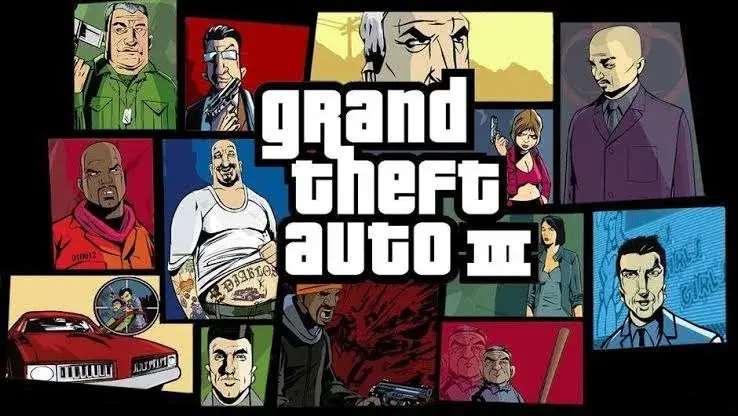 Rockstar's key art for Grand Theft Auto III. Credit: Rockstar Games.
The same model meant every problem landed on a single product.
In June 2005 a fan-made patch called Hot Coffee unlocked a sex minigame left in the files of San Andreas. On July 14, Senator Hillary Clinton asked the Federal Trade Commission to "take immediate action to determine the source of this content and the appropriateness of the M rating." Six days later the ESRB pulled the game's M rating and rated it Adults Only. Walmart, Target, Best Buy and Circuit City took it off their shelves, and Rockstar told stores to stop selling it until they could re-sticker their copies or swap them for a new version.
The recall cut Take-Two's fiscal 2005 net revenue by $24.5 million. The FTC settled with Take-Two and Rockstar in June 2006, and there wasn't a fine. A consumer class action, settled in November 2007, offered buyers up to $35 each.
Other trouble came at the same time. Take-Two lost $184.9 million in fiscal 2006 and $138.4 million in fiscal 2007. On February 14, 2007, its founder, Ryan Brant, pleaded guilty in a Manhattan court to falsifying business records over backdated stock options; the SEC case cost him $6.26 million and barred him from running a public company. On March 29, shareholders holding about 46% of the stock voted in a new board, removed the chief executive, and made Strauss Zelnick chairman.
Two months before GTA IV
On February 19, 2008, Electronic Arts offered $26 a share in cash for Take-Two, about $2 billion. Take-Two had already turned down $25 two weeks earlier. EA made the bid public on February 24 and went to shareholders directly with a tender offer in March. GTA IV was due at the end of April.
Take-Two's board answered with a presentation urging shareholders to reject the tender. It's also where the company tallied the hits: 14.5 million copies of GTA III, 17.5 million of Vice City, 21.5 million of San Andreas, and more than 70 million for the series as a whole.
GTA IV came out on April 29, 2008, on PS3 and Xbox 360, and took more than $500 million in its first week, by Take-Two's estimate of retail sales. Leslie Benzies, who ran Rockstar North, guessed that it had cost about $100 million and taken about 1,000 people to make. Take-Two closed fiscal 2008 with record revenue of $1.54 billion and a $97.1 million profit.
EA walked away on September 14, 2008. By then the financial crisis was dragging down most of the market, and in the February to April 2009 quarter Take-Two's stock traded as low as about $5.56, roughly a fifth of what EA had offered.
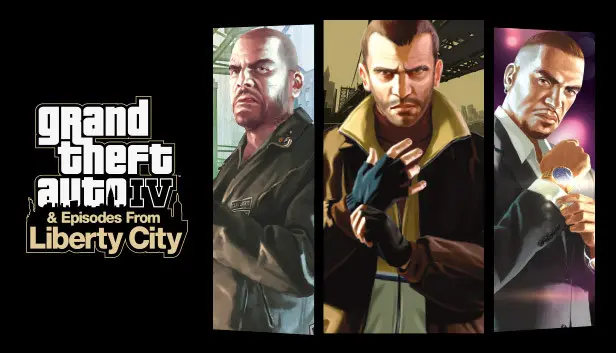 Rockstar's key art for Grand Theft Auto IV and Episodes from Liberty City. Credit: Rockstar Games.
Rockstar tried to keep GTA IV selling with two downloadable episodes in 2009. That December, Ben Feder, then Take-Two's chief executive, said their sales had been disappointing. A new series did better. Red Dead Redemption came out on May 18, 2010, and by August 2011 Take-Two had sold in more than 11 million copies, including more than 2 million of the standalone Undead Nightmare disc.
Shark Cards
GTA V went on sale on September 17, 2013. Take-Two reported sell-through of more than $800 million on its first day and $1 billion in three. By October 29 it had sold in nearly 29 million copies.
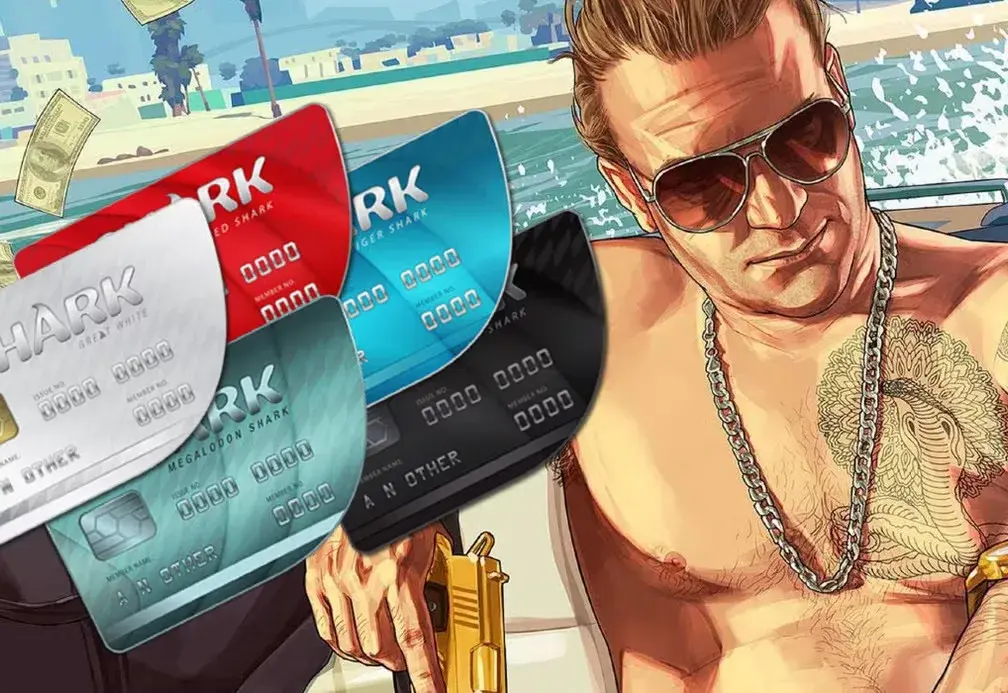 Rockstar's artwork for GTA Online's Shark Cards. Credit: Rockstar Games.
GTA Online switched on two weeks after launch, on October 1, free with the game. Rockstar sold in-game GTA$ for real money from day one, then turned purchases off the next day while the servers struggled, saying they'd stay off "until we have been able to get everybody access to GTA Online and things are running smoothly." Within weeks the packs were back as Shark Cards, starting at $2.99 for GTA$100,000, with $9.99 buying GTA$500,000.
That changed where the money came from. Take-Two's filings call it recurrent consumer spending and define it as revenue "from virtual currency, add-on content, in-game purchases, and in-game advertising." It comes from people who already own the game, and it keeps coming for as long as they play.
In the April to June 2017 quarter, Take-Two said recurrent spending was 58% of its net sales, the operating figure it led with at the time and has since renamed net bookings. Under standard accounting it was 41% of revenue. That November, Zelnick reported that "Grand Theft Auto Online delivered its best quarter yet." The share price, $49.29 at the end of 2016, closed 2017 at $109.78, a gain of 122.7%.
Recurrent spending was 41.6% of Take-Two's revenue in fiscal 2018 and 64.8% in fiscal 2022. That growth included Take-Two's other big earner, the virtual currency in NBA 2K, but the fiscal 2018 report credits GTA Online alone with a $114.9 million rise in revenue that year.
Take-Two doesn't report GTA Online's revenue on its own. The nearest thing to a number is a lawsuit. Leslie Benzies, suing Take-Two for about $150 million in royalties in April 2016, claimed Online had "generated at least $500 million in revenue" and that its purchases had "a nearly 100 percent profit margin." Those are allegations from a complaint. In 2024 Joseph Rubino, who worked on GTA V's cinematics, said a planned story expansion was dropped because Online "was so much of a cash cow and people were loving it so much."
Meanwhile the game itself kept selling, re-released for two newer console generations and for PC. Take-Two counts sell-in, meaning copies sold to retailers and digital storefronts:
| Date reported | GTA V copies sold in |
|---|---|
| October 2013 | nearly 29 million |
| May 2019 | more than 105 million |
| May 2021 | more than 145 million |
| May 2023 | more than 180 million |
| May 2026 | more than 225 million |
| November 2026 | nearly 235 million |
Between May 2025 and November 2026 the count rose from more than 210 million to more than 230 million, about 20 million copies in a year and a half for a game first released in 2013.
Buying the steady part
On January 10, 2022, Take-Two agreed to buy Zynga, the mobile publisher behind FarmVille, for $9.86 a share in cash and stock, a 64% premium. Including debt, the deal valued Zynga at $12.7 billion. In the last quarter of 2021 Zynga had averaged 184 million monthly active mobile users and 37 million daily ones. The deal closed on May 23, 2022.
Zynga changed the shape of Take-Two's income within a year. In fiscal 2023, its first year with Zynga, net revenue rose to $5.35 billion. Recurrent spending went from 64.8% of revenue to 78.1%, and GTA's share fell from 30.9% to 14.6%.
It also cost a lot. Take-Two booked goodwill impairments of $2.34 billion in fiscal 2024 and $3.55 billion in fiscal 2025, and lost $3.74 billion and $4.48 billion in those years. Its filings describe the goodwill charges as "a partial impairment related to one of our reporting units" and don't name the unit, though the fiscal 2025 report does name Zynga when it writes down acquired intangible assets. Fiscal 2026 ended with a $298.2 million loss and no goodwill charge.
By then GTA Online wasn't the fastest-growing part of the business. Reviewing fiscal 2026 on May 21, Take-Two's chief financial officer, Lainie Goldstein, said: "NBA 2K grew over 30%, mobile increased 13%, and Grand Theft Auto Online increased 6%."
Other publishers were buying and being bought. Activision Blizzard announced on November 2, 2015, that it would buy King, the maker of Candy Crush, for $5.9 billion. Microsoft then bought Activision Blizzard for $68.7 billion, closing on October 13, 2023. Electronic Arts, the company that offered $26 a share for Take-Two in 2008, agreed on September 29, 2025, to be taken private by Saudi Arabia's Public Investment Fund, Silver Lake and Affinity Partners at $210 a share, an enterprise value of about $55 billion. That deal closed on August 4, 2026.
November 19, 2026
GTA VI came out on PS5 and Xbox Series X|S on November 19, 2026, priced at $79.99 for the standard edition and $99.99 for the Ultimate Edition. Its first trailer, in December 2023, set the Guinness World Record for the most viewed video game trailer on YouTube in 24 hours, with 90,421,491 views.
On November 9, Zelnick told analysts that "Preorders for Grand Theft Auto VI are tracking far in excess of our initial expectations," and added that "we tend to avoid claiming success before it occurs." Asked about a reported $1.5 billion budget, he said, "We haven't spoken about budgets at all." In that quarter, the last full one before launch, recurrent spending made up 81% of Take-Two's net bookings.
The day after launch, Take-Two said GTA VI had sold 32.5 million units before release and put its day-one worldwide retail sales at $3.79 billion, "based on company estimates through end of day November 19th worldwide." That's what shoppers spent. Stores and platform holders keep their share before any of it reaches Take-Two.
GTA VI didn't launch with an online mode. Bloomberg's Jason Schreier reported in October that one is expected in 2027, and Rockstar hasn't confirmed it. In the meantime, the GTA Online that runs on GTA V carries on. "Rockstar Games will continue to support Grand Theft Auto Online with new content and ongoing events," Zelnick said on November 9.
The quarter that includes GTA VI's launch ends on December 31. Take-Two's forecast for it is $3.35 billion to $3.50 billion in net bookings.
Sources
- Take-Two Interactive (SEC EDGAR): Take-Two Interactive annual reports on Form 10-K, fiscal 1998 to 2026
- Game Developer: Penn: First Grand Theft Auto Was 'Almost Canned'
- Campaign: Advertising & Promotion: BMG plans spree with crime game
- ESRB: ESRB Concludes Investigation into Grand Theft Auto: San Andreas; Revokes M (Mature) Rating
- Electronic Arts (SEC filing): Electronic Arts Form 8-K, Exhibit 99.2 (proposal to acquire Take-Two, February 2008)
- Shacknews: Grand Theft Auto Online cash packs disabled due to launch issues
- Take-Two Interactive (SEC filing): Take-Two Interactive Software, Inc. Reports Strong Results for Fiscal First Quarter 2018
- CNBC: Take-Two Interactive to buy FarmVille creator Zynga for $12.7 billion
- Take-Two Interactive (SEC filing): Grand Theft Auto VI Shatters Entertainment Box Office Records with $3.79 Billion in Day One Retail Sales
- The Motley Fool: Take-Two (TTWO) Q2 2027 Earnings Call Transcript
Comments (0)
Be the first to comment