
Too Far Too Late
PRICE COMPARISON

PLATFORM AVAILABILITY
ABOUT THIS GAME
Surviving on a Remote Planet in Too Far Too Late
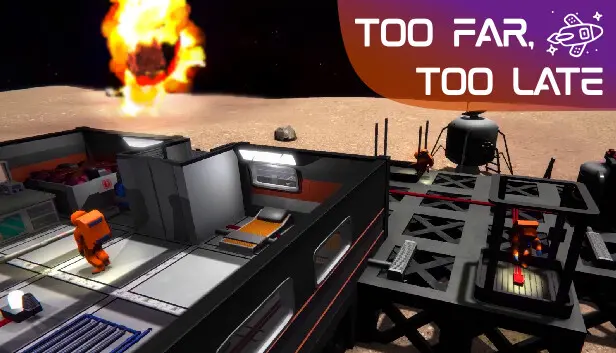
In Too Far Too Late, players find themselves on a one-way mission to a distant planet, tasked with establishing a thriving colony. This simulation game demands strategic thinking and resource management, as returning to Earth is not an option. Players must capitalize on the rich resources available in their new environment while grappling with the dangers that lurk everywhere, setting the stage for a test of survival.
Resource Management for Colony Growth
Early in the game, establishing a base is paramount. Players start by constructing basic shelters, which serve as protective havens for their colonists. The environment is rich with resources, players can mine ores from the planet's surface or delve deeper with specialized mining equipment. These materials are essential for crafting construction items and machinery that will lay the foundations for a sustainable colony.
FREQUENTLY ASKED QUESTIONS
What platforms is Too Far Too Late on?
Too Far Too Late is available on PC.
When does Too Far Too Late release?
Too Far Too Late does not have a confirmed release date yet. Set a free alert to be notified when it is announced.
How much will Too Far Too Late cost?
Too Far Too Late has no price yet. It is not available for purchase. Set a free alert to be notified the moment it goes on sale.
GAME INFO
LANGUAGES
RELATED PRODUCTS





Explore ReadyGame
Deals
Collections
Browse by category
Franchises
- Star Wars
- Final Fantasy
- Assassin's Creed
- Resident Evil
- Warhammer 40,000
- Call of Duty
- Tom Clancy’s
- Yakuza: Like a Dragon
- Batman
- Monster Hunter
- Sonic The Hedgehog
- Far Cry
- The Legend of Heroes
- Dragon Ball
- Life is Strange
- Borderlands
- LEGO
- Marvel
- Doom
- Disney
- Tomb Raider
- Sid Meier
- Warhammer
- Fallout
- The Jackbox Party Pack
- Five Nights at Freddy's
- Dungeons & Dragons
- The Elder Scrolls
- The Lord of the Rings
- Teenage Mutant Ninja Turtles
- Watch_Dogs
- The Walking Dead
- Battlefield
- Little Nightmares
- Wolfenstein
- Atelier
- Sherlock Holmes
- Dragon Quest
- World of Darkness
- Farming-Simulator
- Alien
- Mortal Kombat
- Metal Gear
- Dying Light
- Ys
- Need for Speed
- Metro
- World Rally Championship
- One Piece
- Touhou Project